
Non-Destructive Testing for Metal Castings: A Complete Guide to NDT Methods, Standards, and Acceptance Criteria
2026-07-24
Meta Description: A comprehensive guide to Non-Destructive Testing (NDT) methods for steel and iron castings. Learn MT, UT, RT, PT, VT, pressure testing, and chemical/mechanical analysis — with ASTM/EN standards, acceptance criteria, and how to specify inspection requirements correctly.
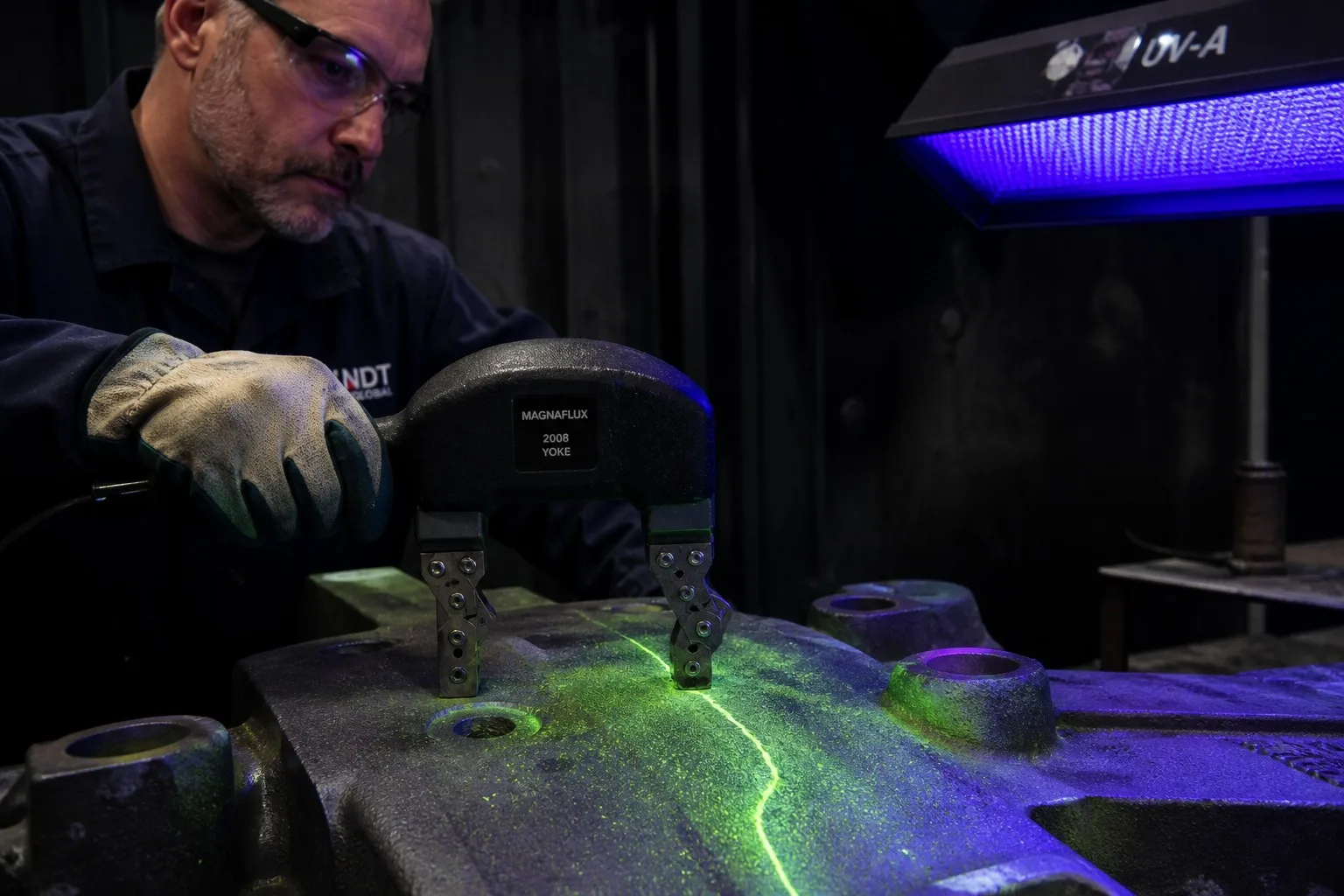
Casting quality cannot be inspected into a part after it is produced — but it can be verified before the part leaves the foundry. Non-Destructive Testing (NDT) is the engineering discipline that makes this verification possible, enabling foundries and buyers to detect surface and subsurface defects without damaging or destroying the casting.
For procurement managers and engineers sourcing cast components, understanding NDT methods is not optional. The difference between specifying "do NDT" and specifying "MT per ASTM E709, acceptance to ASTM A903 Severity Level II, by an ASNT Level II-certified inspector" is the difference between subjective judgment and verifiable quality.
This guide covers the six principal NDT methods applied to metal castings, their underlying physics, capabilities and limitations, applicable standards, acceptance criteria, inspector qualification requirements, and how to specify NDT requirements correctly on drawings and purchase orders.
Part 1: The NDT Decision Framework
Before selecting specific NDT methods, determine what you are looking for and why.
Defect Types by Origin
NDT Method Selection Matrix
At Dandong City Pengxin Machinery Co., Ltd., in-house NDT capability — including MT, UT, PT, spectrometer analysis, hardness testing, and hydrostatic pressure testing — enables comprehensive quality verification before any casting leaves the facility, with documented inspection reports provided as standard deliverables.
Sand Casting vs. Investment Casting vs. Shell Mold Casting: How to Select the Right Process for Your Industrial ComponentsHeat Treatment of Steel and Iron Castings: A Complete Technical Guide to Processes, Parameters, and Quality Control
Products
Hot News
-
![Corrosion Performance and Protection of Ductile Iron in Seawater Environments]()
Corrosion Performance and Protection of Ductile Iron in Seawater Environments
-
![Sand Casting vs. Investment Casting vs. Shell Mold Casting: How to Select the Right Process for Your Industrial Components]()
Sand Casting vs. Investment Casting vs. Shell Mold Casting: How to Select the Right Process for Your Industrial Components
-
![Heat Treatment of Steel and Iron Castings: A Complete Technical Guide to Processes, Parameters, and Quality Control]()
Heat Treatment of Steel and Iron Castings: A Complete Technical Guide to Processes, Parameters, and Quality Control
-
![Resin Sand Casting Production Process in Dandong Pengxin]()
Resin Sand Casting Production Process in Dandong Pengxin
Contact Us
- Phone:+86 15941574876
- Fax:0415-7875330
-
Email:jackma@px-casting.com